Showing posts with label Alligators - Caimans - Crocodiles. Show all posts

Nile Crocodile - Lesotho


Crocodylus niloticus - The Nile crocodile averages between 4 and 5 meters in length and weighs 410 kilos. Able to dedicate hours waiting for an unsuspecting animal to venture close enough to be snatched by its powerful jaw, the crocodile is an ideal ambush predator. It drags the victim into the water and by holding the animal under water, waits until it drowns. Nile crocodiles have a strict hierarchical order granting the largest crocodile primary basking spots and first access to food.

- - - - -

The rise and expansionist policy of the neighboring Zulu people threatened the Sotho people. Under the leadership of King Moshoeshoe, the Sotho people began a forced migration into the Northern Drakensberg Mountains. Moshoeshoe unified the scattered remnants into a force able to successfully resisted the Zulu onslaught. In 1868, Moshoeshoe convinced Great Britain to establish a protectorate over his kingdom, a colonial system lasting until Lesotho gained its independence in 1966.

American Alligator - Alabama


Alabama had been part of the Mississippi territory. It was separated and designated as its own territory prior to Mississippi becoming a state in 1817. Saint Stephens served as the territorial capital from 1817 to 1819; it was then moved to Huntsville. Cahaba became the first state capital, serving from 1820 to 1825.

- - - - -

Alligator mississippienesis - There are two species of alligator in existence today: the Chinese alligator, found throughout the Yangtze River basin, and the American alligator, found along the coastal waterways from North Carolina to Florida and as far west as Texas. The alligator can be traced back 180 million years to the Triassic period and is the least changed reptile on earth since its first appearance. Size varies by location and climate, but the average male grows to a length of 4 meters and weighs about 350 kilos; females are smaller.

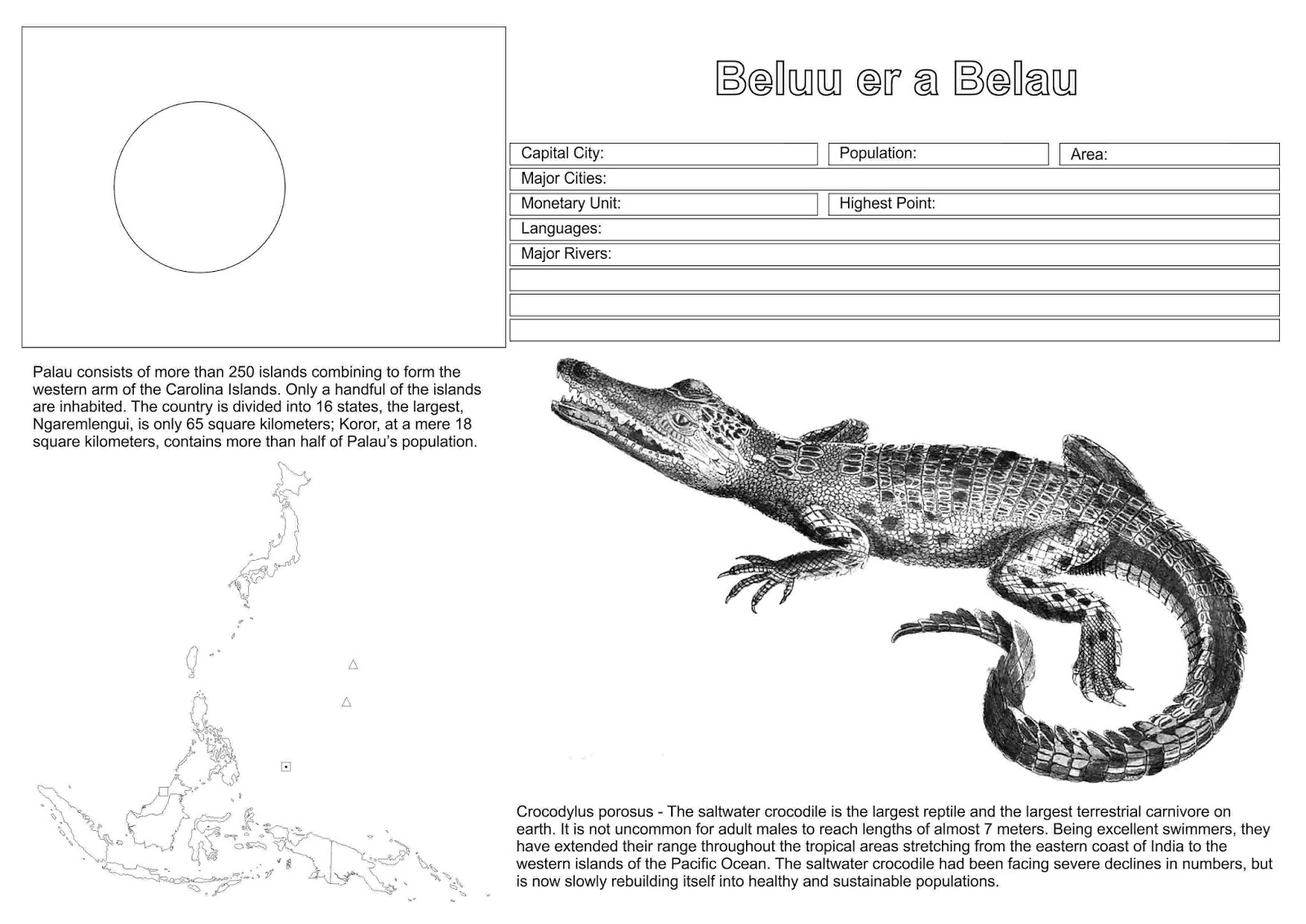
Saltwater Crocodile - Palau


Palau consists of more than 250 islands combining to form the western arm of the Carolina Islands. Only a handful of the islands are inhabited. The country is divided into 16 states, the largest, Ngaremlengui, is only 65 square kilometers; Koror, at a mere 18 square kilometers, contains more than half of Palau’s population.

- - - - -

Crocodylus porosus - The saltwater crocodile is the largest reptile and the largest terrestrial carnivore on earth. It is not uncommon for adult males to reach lengths of almost 7 meters. Being excellent swimmers, they have extended their range throughout the tropical areas stretching from the eastern coast of India to the western islands of the Pacific Ocean. The saltwater crocodile had been facing severe declines in numbers, but is now slowly rebuilding itself into healthy and sustainable populations.