Showing posts with label Azerbaijan. Show all posts

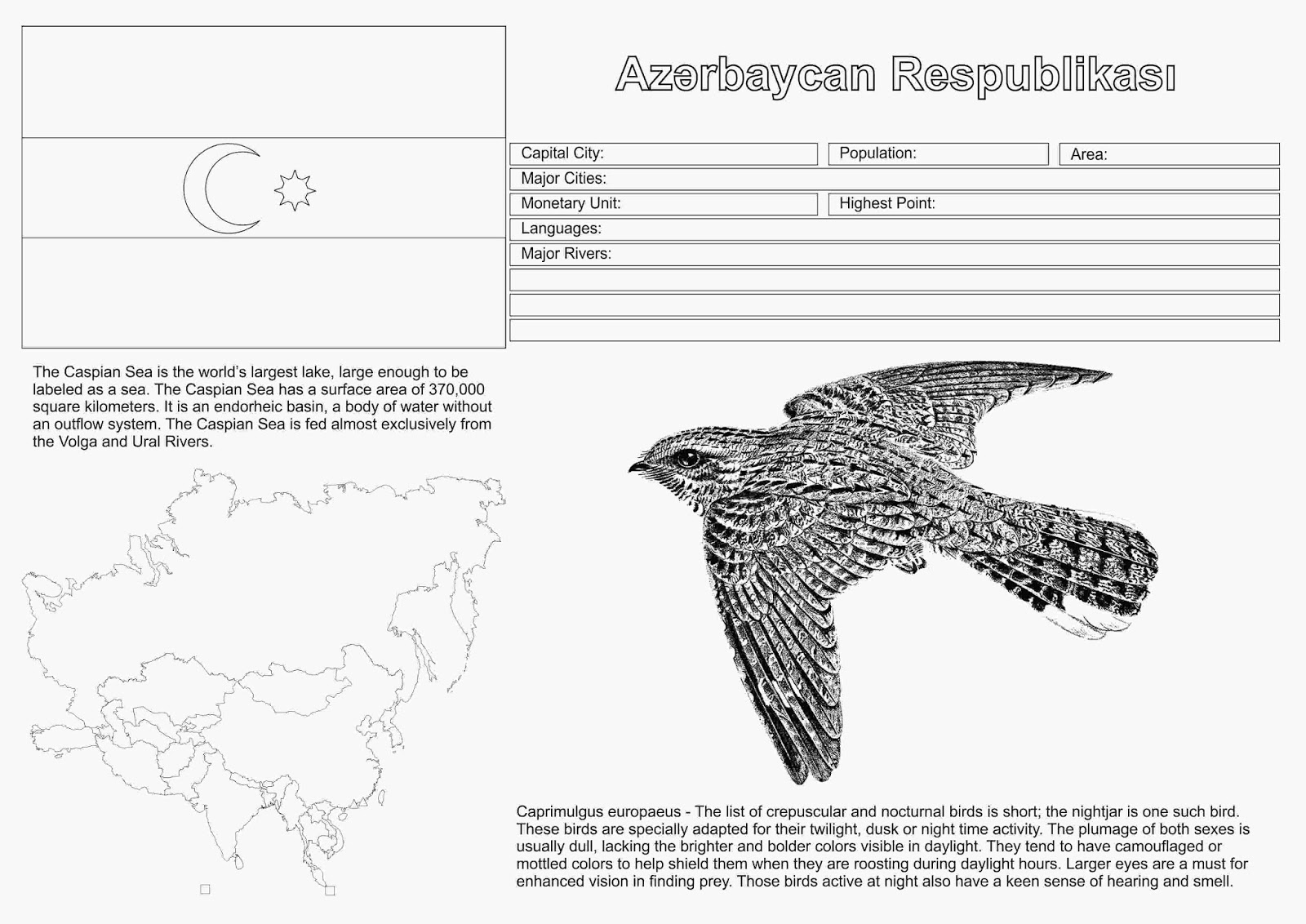
Common Nightjar - Azerbaijan


The Caspian Sea is the world’s largest lake, large enough to be labeled as a sea. The Caspian Sea has a surface area of 370,000 square kilometers. It is an endorheic basin, a body of water without an outflow system. The Caspian Sea is fed almost exclusively from the Volga and Ural Rivers.

- - - - -

Caprimulgus europaeus - The list of crepuscular and nocturnal birds is short; the nightjar is one such bird. These birds are specially adapted for their twilight, dusk or night time activities. The plumage of both sexes is usually dull, lacking the brighter and bolder colors visible in daylight. They tend to have camouflaged or mottled colors to help shield them when they are roosting during daylight hours. Larger eyes are a must for enhanced vision in finding prey. Those birds active at night also have a keen sense of hearing and smell.

Little Bustard - Azerbaijan


Tetrax tetrax - The little bustard can be found from Southern Europe to western regions of Central Asia. It prefers open areas with tall grass to provide cover. Once common throughout its native range, the little bustard is facing a decline in numbers as a result of habitat degradation and loss from hunting. Azerbaijan hosts the largest wintering population of little bustards with thousands of birds migrating into the Adjinohur Valley and the Shirvan National Park of Eastern Azerbaijan.

- - - - -

Following the Russian Revolution, Azerbaijan, Armenia, and Georgia formed the Transcaucasian Democratic Federative Republic. The union lasted from February to May of 1918. The Azerbaijan Democratic Republic was declared in May of 1918, and was the first democratic and secular republic in the world with a Muslim majority. The Soviet Union reasserted its control over Azerbaijan in 1920, and it was not until 1991, with the demise of the Soviet Union, when Azerbaijan became independent again.